Speaking up about menopause treatment
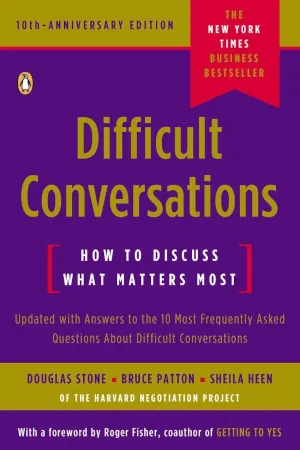
The stakes of speaking clearly often rise just as tolerance for avoidance falls. The framework separates facts, feelings, intentions, blame, and identity, helping readers understand why one discussion can carry years of history. That makes it particularly useful when menopause treatment must be discussed with a clinician, partner, employer, or family member who sees the situation differently. On MHS, the book becomes a tool for self-advocacy without aggression: preparing the real question, listening without disappearing, and staying open to information that complicates one’s own story. It teaches that clarity and relationship do not have to be opposites.
About Stone, Patton and Heen
Douglas Stone, Bruce Patton, and Sheila Heen built this framework through years at the Harvard Negotiation Project, then kept testing it beyond conference rooms. Heen often brings the ideas home to parenting, where expertise does not magically prevent defensiveness or misunderstanding.


Some links may be affiliate links. This does not affect our editorial selection.